Clifton Village
The village is a desirable living location with a number of substantial residential properties. Thatched-roof cottages set the medieval tone of the village along with the ancient St Marys church.
Historic Doomsday Village
The Manor of Clifton was first recorded in the Domesday Book in 1086 as having a church and a mill. The value of the Manor had decreased since the Norman Conquest of 1066 from £16 to £9. For the next 700 years the Clifton family of Clifton owned the manor, in which their home was Clifton Hall. Today, the original Clifton Hall is converted into high quality gated apartment accommodation set in substantial landscaped gardens.
Prior to Clifton being subsumed into the city, the area was previously within a Civil Parish called Clifton with Glapton until 1952, Glapton being a small scattering of houses and farms prior to when the estate was built, and was in the area approximately where present day Glapton Lane is, there still being some older houses that predate the estate along the lane.
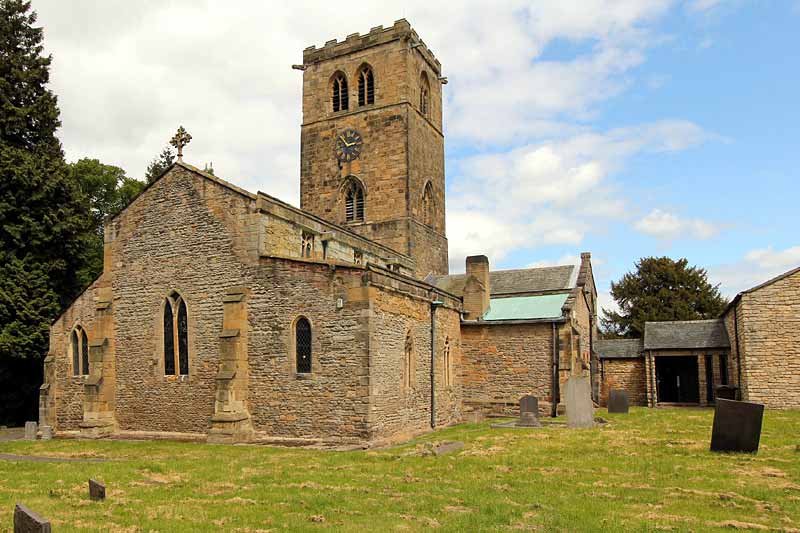
The historic Grade 1 listed Saint Marys Clifton Village Church also dates back to before the Norman conquest, being recorded in the Doomsday Book in the year 1080. Today the church is an integral part of a thriving village community with a closed cemetery containing a number of burials of the Clifton family.
Close access from the village to the River Trent provides good scenic riverside walking & cycling routes all the way into the centre of the city of Nottingham, likewise to the quaint villages of Thrumpton and Barton-in-Fabis. Easy access walks also extend into the wooded Clifton Grove, a long-established pathway described by the famous Nottingham born author D H Lawrence in his memorable book Sons & Lovers.
For more information visit the website of the Clifton Village Residents Association.
 THE OLD FARMHOUSE